The myth
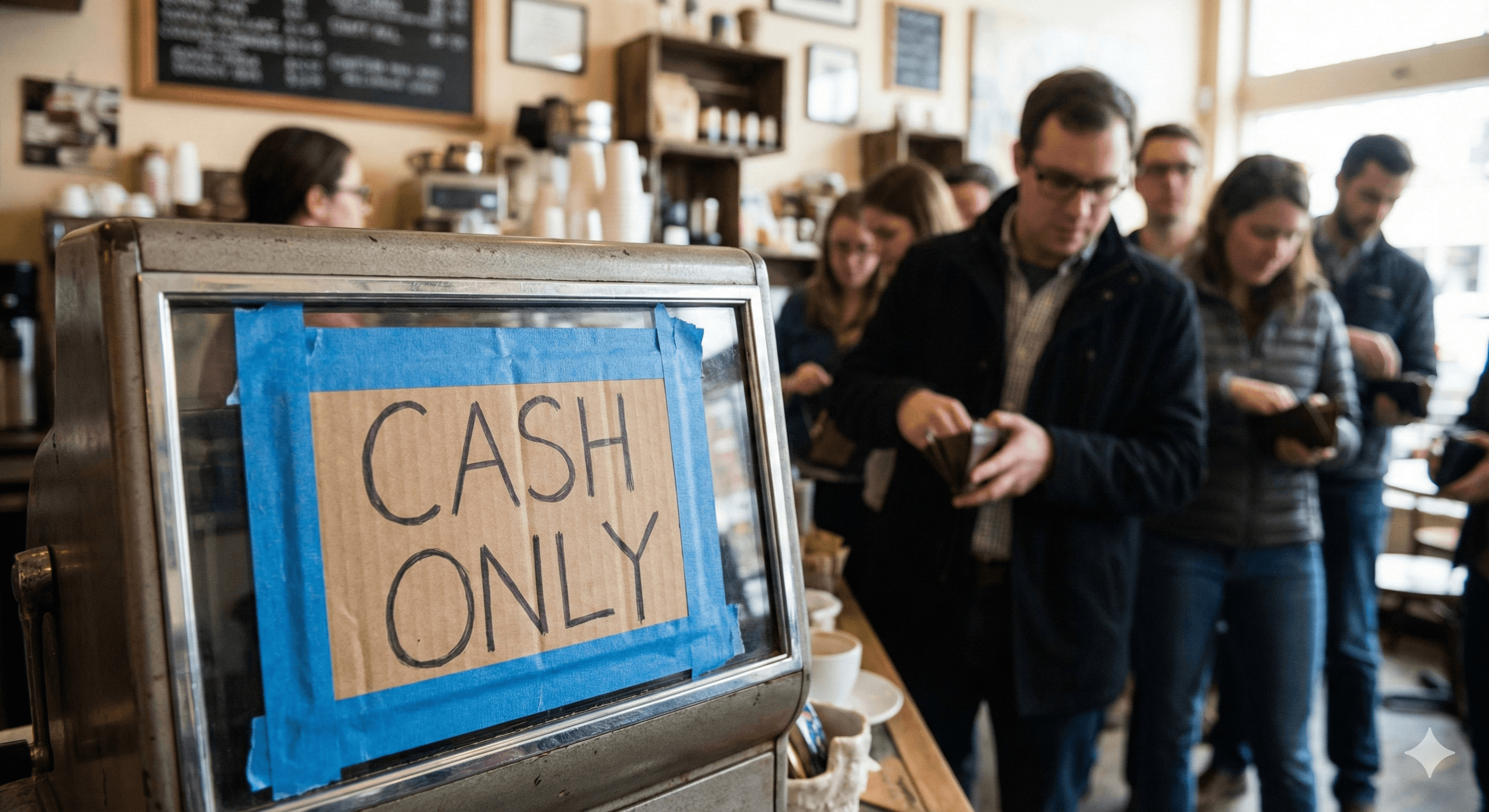
The standard advice during a payment outage is: “Just take cash.”
That sounds reasonable until you operate in the real world:
- customers don’t carry enough cash
- ATM runs are friction (and lines kill throughput)
- many purchases are impulse/time‑boxed (they don’t come back later)
In practice, “cash only” often turns into demand destruction, not demand delay.
What this changes for risk
If your revenue is concentrated into fixed windows (dinner service, weekend rush, event hours), you don’t have “make‑up time.”
A 45‑minute acceptance blackout during peak is not recoverable by “staying open later.” The footfall is gone.
Why this matters for insurance design
This is why parametric protection can be honest and simple for certain segments:
- Hospitality/perishables: recapture is close to zero → payouts can be closer to “full value”
- Some ecommerce: recapture can exist → payout ratios may need calibration (or triggers tied to sustained loss vs momentary dips)
The point isn’t perfect precision — it’s a contract both sides understand.
The better question: “What’s your digital revenue at risk per peak hour?”
If you want to size coverage quickly, you need three numbers:
- peak hour card volume (GMV)
- baseline acceptance rate
- how long an incident becomes “catastrophic” (10/15/30 minutes)
From there, you can define:
- a strict trigger (acceptance collapse vs baseline)
- a capped payout sized to the hour
CTA: Get a blackout quote
If “cash only” is not an acceptable answer in your business, you’re the target customer.
Send your stack + peak hour volume and we’ll propose:
- a trigger template
- a payout sizing
- an indicative premium band