The promise of “offline mode”
Offline mode is sold as the fallback plan:
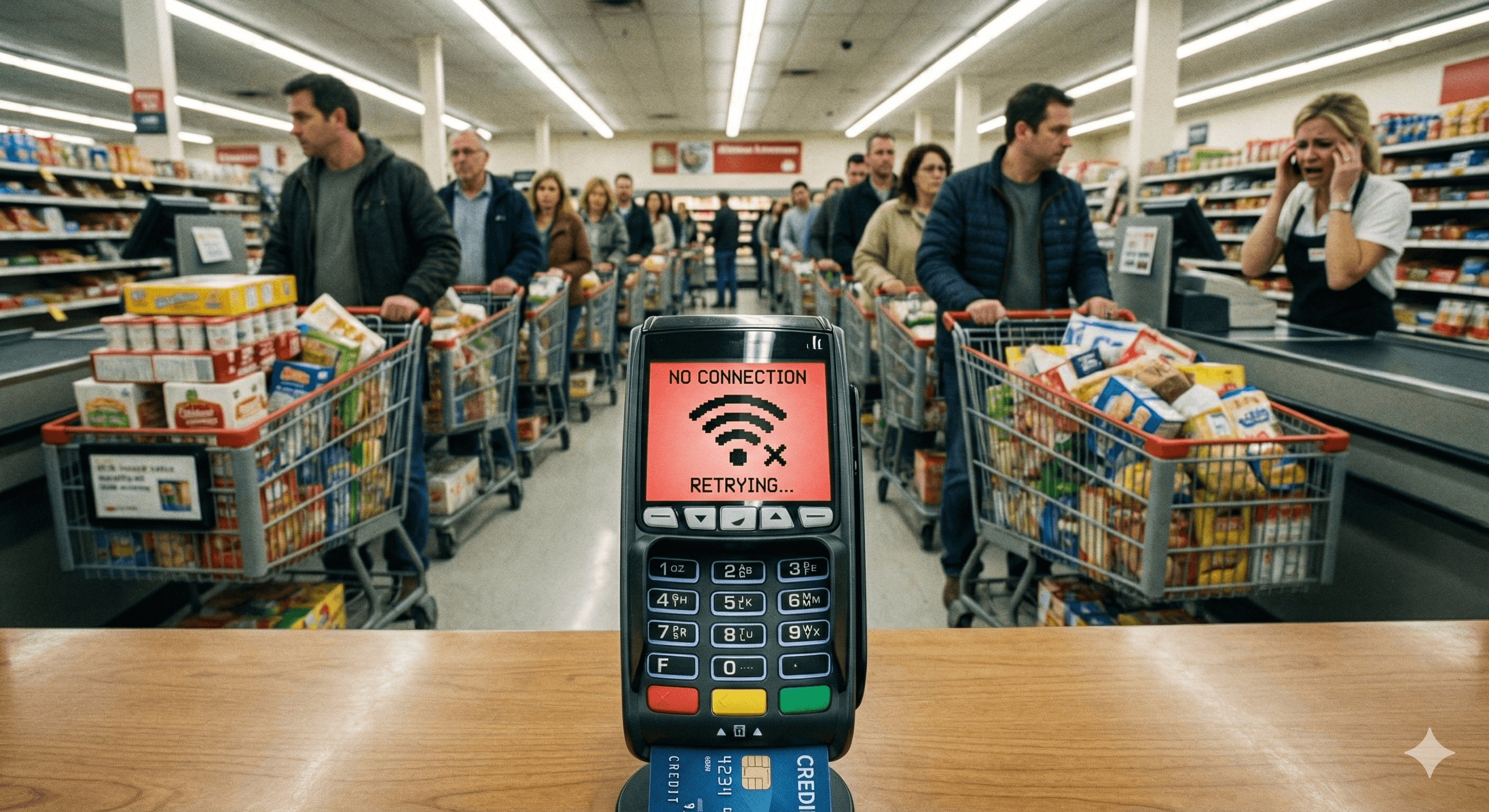
- Internet drops → POS flips to offline mode
- You keep swiping cards → the POS “stores” transactions locally
- Internet returns → everything uploads and settles later
In theory, it prevents the “cash‑only” scramble and protects your peak hours.
The reality: offline mode makes you the underwriter
Offline mode doesn’t guarantee you get paid. It changes the failure mode:
You can accept a payment in the moment… and still lose the revenue later.
If you’ve ever had a shift where receipts looked fine — and the next day the deposit is short — you already know this isn’t a hypothetical.
Where it breaks (the failure modes that actually hurt)
Offline mode tends to fail in a few repeatable ways:
1) The upload black hole
Transactions taken offline never successfully upload when connectivity returns. They don’t settle. They may not even appear cleanly in reporting later. The money is simply unrecoverable.
2) Later declines (the “served it already” problem)
Offline transactions often aren’t truly authorized in real time. When the system goes back online, the processor attempts to complete the flow. Some transactions decline later (insufficient funds, expired card, stolen card, issuer behavior, etc.). In hospitality and retail, you’ve already delivered the goods. There is no practical way to collect after the fact.
3) Tips, adjustments, and reconciliation pain
Even when the base sale “comes back,” secondary pieces can break: tips don’t attach, adjustments don’t reconcile, shift closeout is messy, and staff loses trust in the system.
4) Operational chaos is still a cost
Offline mode doesn’t restore normal operations. It often creates manual cleanup: void‑and‑re‑ring workflows, duplicate prints, delayed closeouts, customer complaints, and staff time burned.
Why this is a great first insurance product
This is exactly the kind of risk that works for parametric/structured coverage:
- Bounded exposure: offline volume per location per incident is measurable and can be capped
- Objective evidence: offline transaction logs + settlement outcomes are machine‑checkable
- Clear buyer pain: “I swiped it. I served it. I didn’t get paid.”
Most importantly: merchants don’t want a claims process here. They want a guarantee.
What ViaVerro would cover
Offline Transaction Integrity Guarantee (pilot template)
If you accept a card payment in offline mode, it should settle — or you should get paid anyway.
Concept: ViaVerro verifies the offline batch and guarantees transaction integrity.
Covered (pilot concept):
- Offline transactions that fail to upload, fail to settle, or later decline after being accepted during verified offline mode
- Integrity issues tied to the offline store‑and‑forward period (not “normal” day‑to‑day declines)
Not covered (pilot concept):
- Chargebacks / customer disputes (separate product class)
- Fraud/risk holds on your payouts unrelated to offline acceptance
- Manual entry abuse / intentional trigger attempts
- Offline mode used outside agreed conditions (e.g., forced offline when online is available)
Payout model (simple): Payout equals the face value of affected offline transactions, up to a pre‑agreed cap per location / per incident / per day.
What data we need (and what we don’t)
To make this clean, we need evidence, not stories.
Minimum data (read‑only):
- POS offline transaction log (timestamp, terminal ID, amount, offline flag, upload status)
- Settlement / deposit reconciliation (what actually settled vs didn’t)
- Decline outcomes for the offline‑captured set (reason codes at a summary level)
Optional (helps reduce disputes):
- Store hours (to define “peak windows”)
- A lightweight connectivity heartbeat (to prove you didn’t “force offline”)
What we do not need: cardholder data or payment payloads.
CTA: Reserve an Offline Integrity pilot slot
If you run a cloud POS (especially high‑velocity service hours) and you’ve ever feared offline mode, you’re the right pilot.
Reserve an Offline Integrity pilot slot.
Send:
- POS vendor + payment stack
- locations / terminals
- Typical Friday peak hourly card volume
- How often offline mode happens (even roughly)
We’ll reply with: pilot fit, a draft trigger definition, and an indicative premium band.