
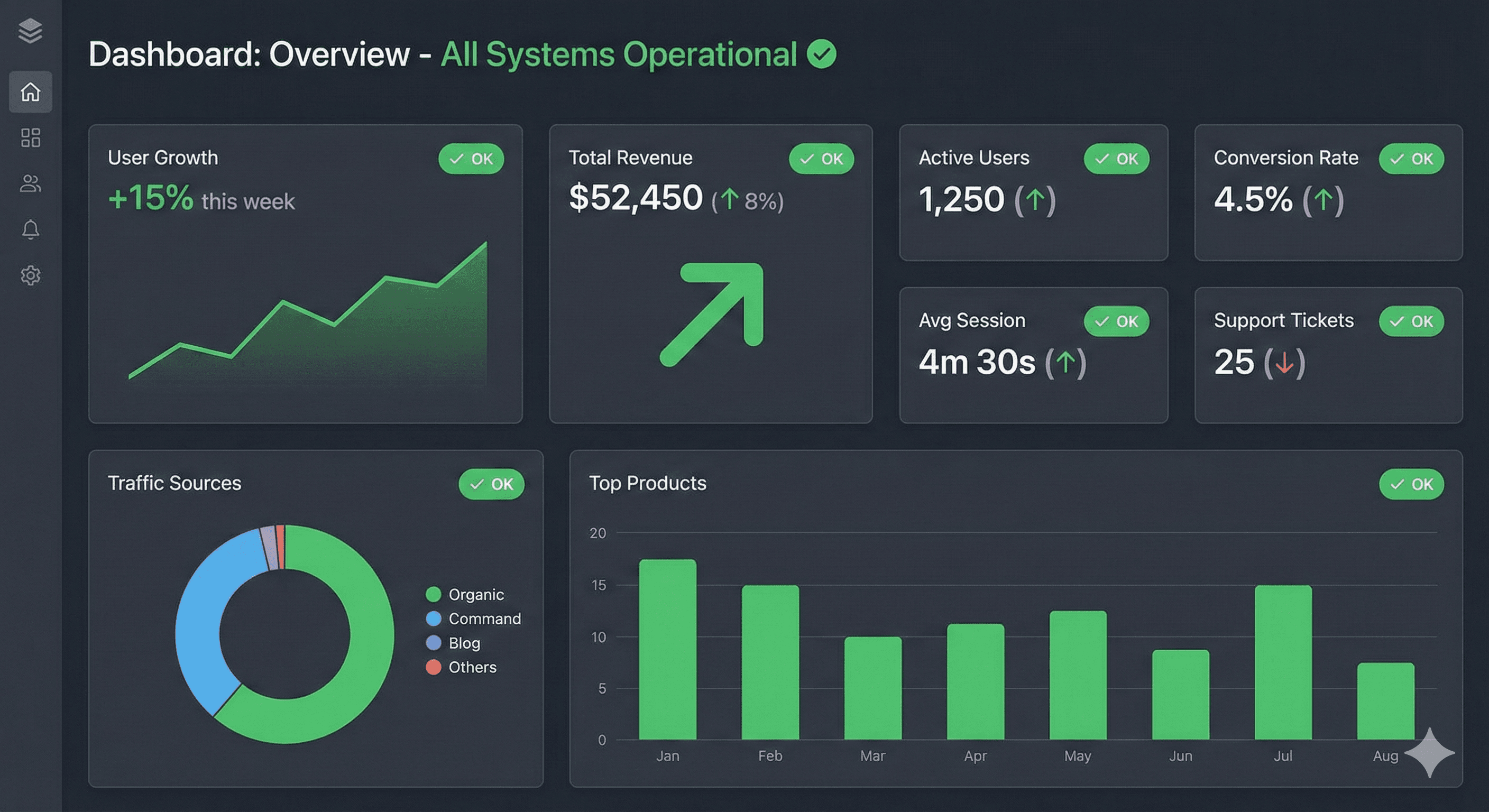
The incident pattern: “We were down. The status page was fine.”
This is one of the most corrosive outage experiences:
- your POS / checkout fails
- customers walk
- you check the vendor status page and see green
- support is slow or unreachable during the incident
- later, everyone debates what “really happened”
From an operator standpoint, it doesn’t matter whether the failure sat in:
- your ISP
- the POS app
- the gateway
- the acquirer
- a cloud dependency
- a partial degradation that never triggers a public incident
The cashflow hole is the same. But without evidence, you don’t get compensated.
Why this keeps happening in payments
Payment stacks are multi‑party systems. There is no single “source of truth.”
Even honest vendors can be “operational” while:
- a specific region degrades
- specific payment methods fail
- approvals dip without full outage
- downstream dependencies (or merchant‑side issues) break completion
This is why “prove it” becomes the default response.
The oracle problem (in plain English)
Insurance dies when the event can’t be proven cleanly.
So the job is not “monitoring.” It’s verification.
You need a way to answer:
- What exactly was the rule?
- What data counts?
- What does the data say?
- Can someone reproduce the same result?
The ViaVerro approach: Evidence Packs → Verified Result
Instead of trusting a status page, ViaVerro defines:
- Template: a strict event definition (the rule)
- Evidence Pack: the minimum proof bundle (only the data that counts)
- Verified Result: a signed YES/NO + payout amount, reproducible and auditable
This turns “my checkout felt broken” into a verifiable event.
Minimum viable evidence pack for payment acceptance blackouts
If you’re a merchant, you can usually provide (read‑only) evidence that is stronger than a vendor status page:
Merchant outcomes
- approval/decline counts over time
- error rates / timeouts (summary level)
Independent probes
- synthetic authorizations / checkout probes from multiple regions
- latency + failure outcomes (not payloads)
Third‑party monitors
- external incident monitors or telemetry providers (when available)
Context
- store hours / peak windows
- baseline acceptance levels for your business
You don’t need perfect truth. You need enough independent signals to make disputes rare.
CTA: Ask for the Evidence Pack spec
If you want to know whether you’re “verifiable enough” for deterministic payout protection:
Request the Evidence Pack spec. Tell us your stack (POS/PSP/gateway) and whether you can export basic outcomes + settlement summaries. We’ll tell you what’s possible and what’s missing.